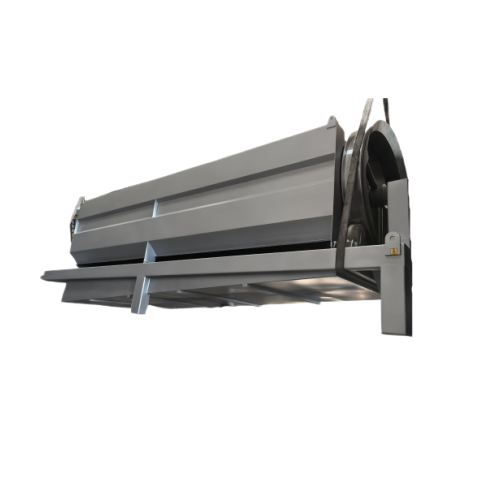
What types of filter screens are available for rotary drum screen?
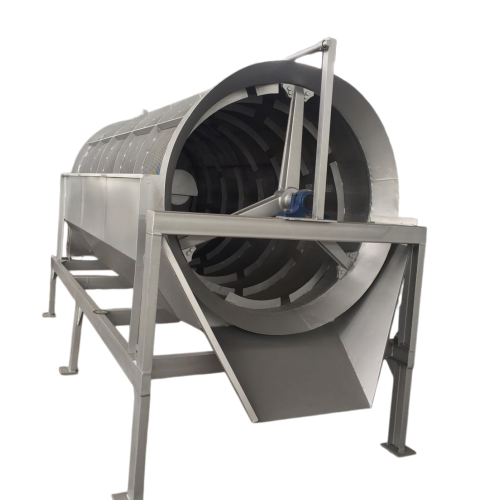
The drum structure design of Rotary drum screen is highly mature. Its core objective is to achieve maximum water flow, minimum energy consumption, and convenient maintenance while ensuring efficient interception and smooth slag discharge.
Industrial filtration equipment uses a wide variety of internal filter screens, and the choice directly determines the filtration accuracy, efficiency, durability, and cost. JX Filtration will introduce several common types of internal filter screens for rotary drum screen.
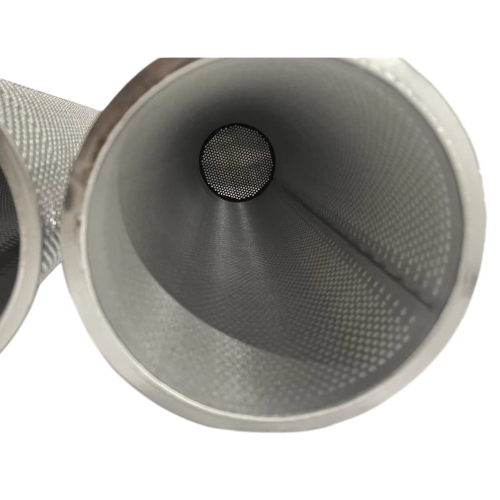
1. Woven Wire Mesh
Plain weave: The most common structure, with interlaced warp and weft threads, providing good stability and precision control. Suitable for various bag filters, basket filters, and vibrating screens.
Twill/Satin weave: Uses thicker threads, resulting in more stable mesh size and better fatigue resistance. Suitable for high-load and high-rigidity applications, such as the base layer of high-pressure backwash filter cartridges.
Dutch weave: A multi-layered, dense weave with thick warp and fine weft threads, achieving high precision (micron-level) and high strength. Commonly used for high-pressure filtration and powder collection.
2. Profile Wire Screen (Wedge Wire)
Structure: Constructed from V-shaped (trapezoidal) cross-section support wires and circular cross-section winding wires welded together, forming a continuous, uniformly spaced filter surface.
Features:
- Constant gap: Filtration accuracy is determined by the wire gap, resulting in high precision.
- High aperture ratio, low pressure drop: The V-shaped wire design prevents filter cake clogging and facilitates backwashing.
- High strength, wear-resistant.
Applications: Core filter layer in rotary drum screen drums, centrifuge liners, screens, and filter cartridges. It is one of JX Filtration's core filter types in solid-liquid separation equipment.
3. Perforated Screen
Structure: Perforated with regularly arranged round, square, or slit holes in a metal plate.
Features: Extremely robust and durable, but with a relatively low aperture ratio; accuracy is limited by plate thickness. Primarily used for coarse filtration (>1mm), supporting other fine filter screens (as a skeleton), or for dewatering screens and grids.
4. Sintered Metal Mesh/Felt
Structure: A single, porous material formed by sintering multiple layers of woven metal mesh or metal fiber felt under high temperature and vacuum.
Features:
- Three-dimensional mesh structure, deep filtration, and extremely high dirt-holding capacity.
- High precision and high strength; backwashable and regenerable.
- High temperature and pressure resistance, impact resistant.
Applications: High-end self-cleaning filter cartridges, gas filtration, catalyst recovery, and other applications requiring extremely high reliability and lifespan.
To provide you with the most accurate filter selection solution, please provide the name of the material to be filtered and its detailed characteristics. JX Filtration can combine our engineering case studies to determine the optimal combination of filter material and structure for you, and provide corresponding testing suggestions.
Any requirements, contact us now!
Nina
Email: nina@filtrationchina.com
Mobile/Whatsapp/WeChat:+86 172 6957 1060