How to choose a suitable wedge wire screen?
As a core filtration element in solid-liquid separation, selecting a suitable screen tube directly affects the efficiency, lifespan, and operating costs of the entire system. The following is a professional selection guide:
Step 1: Define Core Filtration Process Parameters
This is the foundation of selection and must be determined first.
1. Filtration Accuracy (pore size/slit width): This is the most critical parameter. What is the minimum particle size you need to retain? Common units are millimeters (mm), micrometers (μm), or mesh.
2. Characteristics of the Processed Media:
- Material Properties: Particle hardness, shape (sharpness), viscosity, and solids content.
- Chemical Properties: Acidity/alkalinity, corrosiveness, and temperature. This directly affects material selection.
3. Operating Conditions:
- Operating Pressure: Internal forward filtration pressure or external backwashing pressure.
- Operating Temperature: Affects material strength and sealing performance.
Step 2: Determine the Screen Tube Structure and Manufacturing Process
Based on the parameters from Step 1, select the most suitable structure and manufacturing process.
- Perforated screen tubes: High strength, low cost, high open area ratio, suitable for large particles.
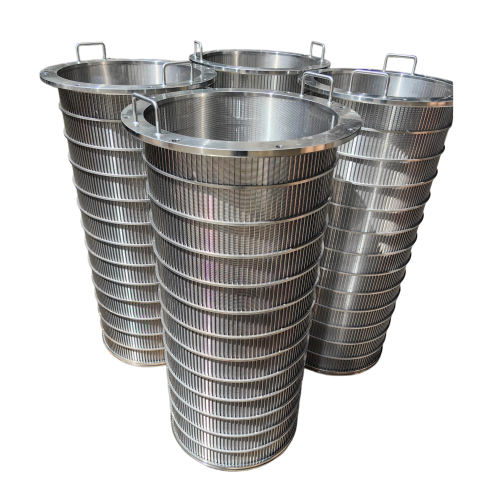
- Wedge wire screen tubes: V-shaped slits, not easily clogged, easy to clean, good throughput.
- Woven mesh composite screen tubes: Ultra-high precision, multi-layer structure, strong dirt-holding capacity.
Step 3: Choosing the right material.
The material determines corrosion resistance and service life.
- 304 (06Cr19Ni10): General purpose, resistant to general corrosion, used in neutral or mildly corrosive environments (such as ordinary groundwater, some food processing).
- 316 (06Cr17Ni12Mo2): Recommended first choice. Due to the addition of molybdenum (Mo), its resistance to chloride ion corrosion and pitting corrosion is significantly better than 304, suitable for most industrial water, sewage, seawater, and chemical fluids.
- 316L (022Cr17Ni12Mo2): Ultra-low carbon version, with excellent resistance to intergranular corrosion, particularly suitable for components that cannot be heat-treated after welding, or for handling more corrosive media.
- Duplex steel, Hastelloy, etc.: Used in extreme corrosive, high-temperature, and high-pressure environments, but are expensive.
Step 4: Focus on Mechanical Strength and Support Design
The screen tube must maintain geometric stability under operating pressure.
- Support Structure: For longer screen tubes or those operating at higher pressures, internal or external supports are necessary. Common supports include reinforcing rings, longitudinal reinforcing ribs, and center rod supports.
- End Connection Types: Threaded, flanged, clamped, quick-connect couplings, etc., must perfectly match your filter housing.

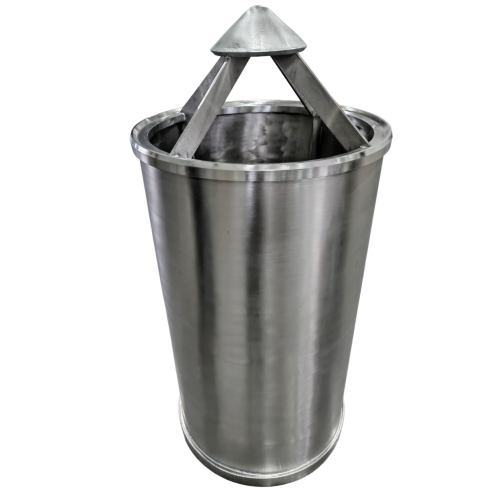
For most industrial water treatment and wastewater filtration applications, 316L material, electrolytically polished V-shaped wedge wire screen tubes or laser-embedded microporous screen tubes offer the best balance in terms of clogging resistance, easy cleaning, corrosion resistance, and long service life. If you can provide more specific application scenarios and parameters, JX Filtration can provide you with more targeted analysis.
Any requirements, contact us now!
Nina
Email: nina@filtrationchina.com
Mobile/Whatsapp/WeChat:+86 172 6957 1060