How to choose a sieve bend screen?
DSM Screen is a high-efficiency and economical device used in water treatment and solid-liquid separation for screening and separating large-flow, low-concentration materials.
I. Definition and Core Principles of a Hydraulic Screen
A hydraulic screen, also known as a gravity screen, rotary screen, or simply a sieve (depending on its specific structure), is a device that utilizes gravity or hydraulic force to cause materials to flow on the screen surface, thereby achieving solid-liquid separation or particle classification.
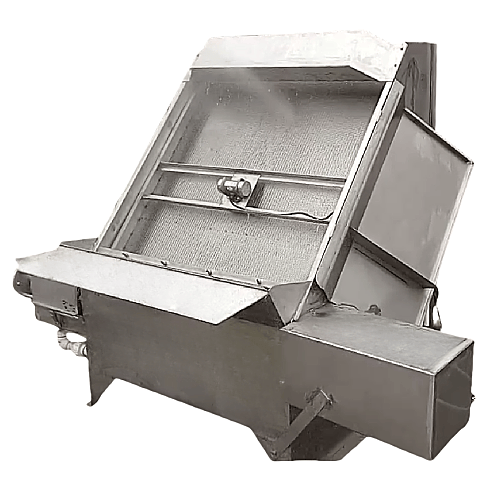
Its core principles are:
- Material Gravity Flow: Liquids or mixtures containing solid particles flow along the screen surface due to their own gravity or a slight hydraulic gradient.
- Shear Separation: During the flow, liquids and fine particles fall through the screen openings or holes, becoming the undersize material (filtrate/fine material).
- Solid Retention: Solid particles larger than the screen openings are intercepted by the screen surface and slide down to the outlet, becoming the oversize material (filter cake/coarse material).
II. Key Parameters and Selection Considerations
1. Screen Slot/Aperture Accuracy
- Applicable to: From coarse fibers and pulp (1-3mm) to fine silt and particles (0.1-0.5mm).
- Key: The "V"-shaped design of the wedge wire screen is less prone to clogging, resulting in a large flow rate, making it the preferred choice for hydraulic screens.
2. Processing Capacity (Flow Rate)
- Influencing Factors: Effective screen area, screen slot size, material concentration, viscosity.
- Calculation Reference: Usually expressed in m³/h·m². For example, an arc screen can process 50-200 m³/h/m² of white water.
3. Separation Efficiency and Retention Rate
- Objective: To retain as many solids of the target size as possible while ensuring sufficient processing capacity.
- Trade-off: Smaller screen slots result in a higher retention rate, but reduce processing capacity and increase the likelihood of screen clogging.
4. Materials and Corrosion Resistance
- Common Materials: Stainless steel (304/316L) is the optimal choice due to its corrosion resistance and hygiene. Rubber-lined carbon steel is used in larger applications or those with less corrosive environments.
- Screen Materials: Wedge wires are mostly made of stainless steel; polyurethane screens are used in applications requiring high wear resistance.
JX Filtration offers DSM screens in various materials (e.g., 304/316 stainless steel), with screen openings (typically 0.25mm to 3mm) and custom sizes to suit different flow rates and impurity characteristics. If you have specific flow rate, water quality (especially solids type and content), or installation space information, we can provide you with more precise selection advice.


Any requirements, contact us now!
Nina
Email: nina@filtrationchina.com
Mobile/Whatsapp/WeChat:+86 172 6957 1060